
Michigan State embarrasses Michigan, and Kyle Whittingham is out of excuses
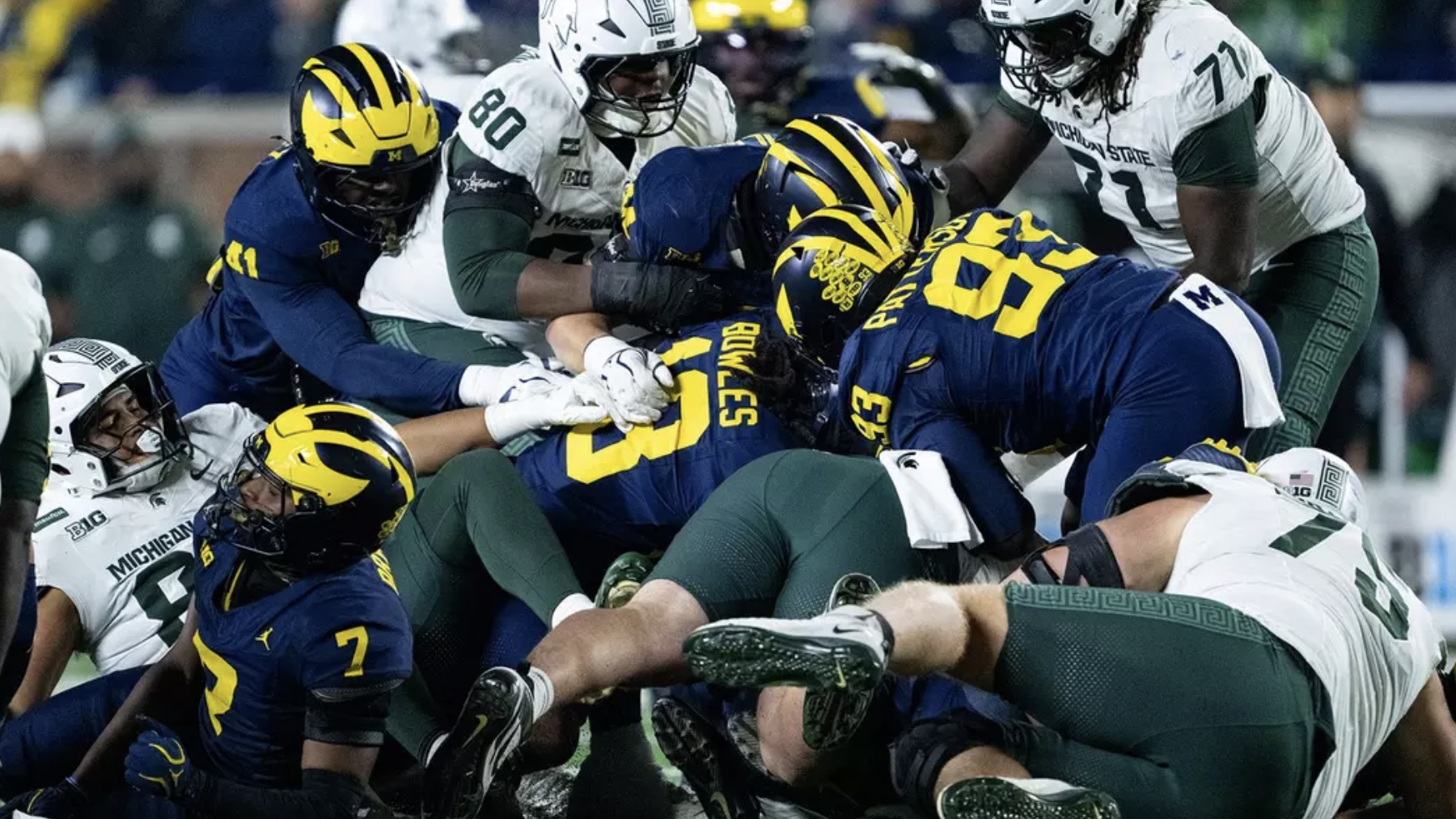
Michigan State didn’t score a touchdown Saturday night. It didn’t need to. The Spartans beat Michigan 15-6 in a game that was nowhere near as competitive as the final score suggests.
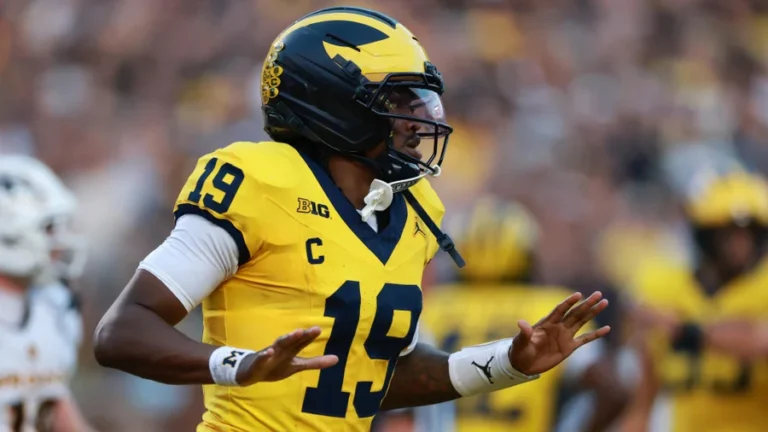
The Wolverines were outcoached, outplayed, and thoroughly embarrassed by their in-state rival, managing just 192 yards of offense, committing four turnovers, and scoring their only touchdown with less than two minutes remaining. For Kyle Whittingham, the loss raises questions that go well beyond one Saturday night. Michigan’s problems have been obvious for weeks, yet the same mistakes keep surfacing, with seemingly no answers from the coaching staff. At some point, Michigan has to accept whether the people brought in to fix this program can do the job.
That point might be now, and the answer is no.
Another offensive disaster
Michigan’s opening possessions offered a familiar combination of missed opportunities and self-inflicted mistakes.
Tommy Carr looked unsettled early, throwing an interception on a high pass intended for JJ Buchanan. Michigan eventually found some success behind Bryson Kuzdzal, putting together a 13-play, 71-yard drive that reached the Michigan State 7.
Then came another short-yardage failure. Savion Hiter was stopped for a loss on third-and-1, and Jacob Baggett missed a 26-yard field goal.
Michigan wouldn’t threaten again for quite some time.
Following that missed kick, Michigan State outgained the Wolverines 272-23 during a stretch that saw the Spartans take complete control.
Michigan State led 6-0 at halftime, marking the third time in four games Michigan had been shut out in the opening two quarters.
The third quarter might have been the most embarrassing stretch of the night.
Cam Brown delivered a 52-yard punt that pinned Michigan State at its own 1-yard line. The Spartans responded with a 17-play, 79-yard drive that consumed 10:41 and ended in another field goal.
Michigan ran just seven offensive plays in the quarter, with its second possession ending when Kuzdzal fumbled near midfield.
The Spartans eventually built a 15-0 lead behind five Liam Boyd field goals.
Michigan finally found the end zone with 1:35 remaining when Hiter scored from a yard out, completing a late 75-yard touchdown drive. The Wolverines converted a fourth-and-21 along the way and got a 31-yard completion from Carr to Buchanan to set up the score.
The two-point conversion failed, leaving Michigan with six points and little consolation.
Michigan State finished with 298 yards and 38:07 of possession compared with Michigan’s 192 yards and 21:53.
Carr completed 14 of 26 passes for 138 yards and two interceptions. He was sacked five times.
Kuzdzal led Michigan with 49 rushing yards on nine carries. Hiter added 17 yards and the lone touchdown. Michigan finished with just 54 rushing yards.
The Spartans entered Saturday with five defensive takeaways all season, the fewest in the Big Ten. They forced four against Michigan, nearly doubling their season total in one night.
Michigan State didn’t need to play particularly well offensively to dominate. It simply had to avoid the mistakes Michigan couldn’t stop making.
The quarterbacks were never the problem
Michigan’s offensive struggles became a quarterback controversy when it benched Bryce Underwood against Penn State.
Carr provided a spark that afternoon, but Michigan’s improvement wasn’t exclusively about changing quarterbacks. The Wolverines also leaned into more zone-running concepts, attacking between the tackles rather than relying on slow-developing plays.
That adjustment helped.
Yet the staff appeared to treat Carr as the solution to problems that went far beyond Underwood.
Now Carr is dealing with the same issues. He’s a true freshman playing behind an offensive line that can’t consistently protect him, with an unreliable running game and an offensive approach that repeatedly puts him in difficult situations.
Underwood was asked to make this offense work. When he couldn’t, Carr was handed the same responsibility.
Neither quarterback has been given a consistent opportunity to succeed.
The players have made mistakes. They aren’t above criticism. But Michigan’s offensive staff has spent much of this season putting young players in positions where those mistakes become almost inevitable.
What exactly is this staff doing?
The fourth-quarter offensive line changes were perhaps the most bizarre decisions of the night.
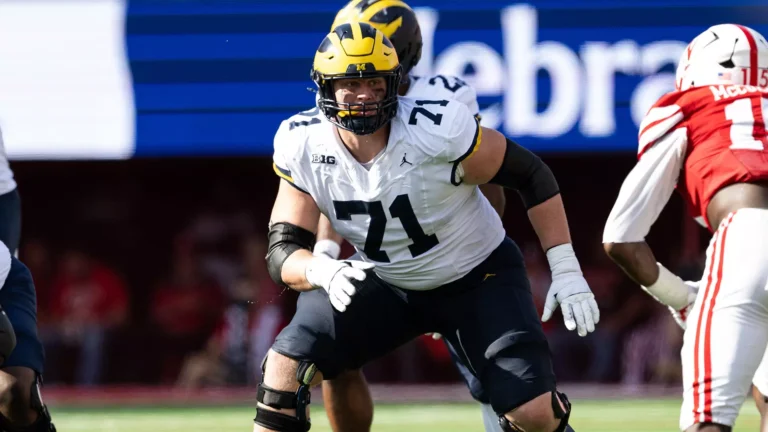
True freshman Andrew Babalola made his season debut at left tackle. Evan Link moved back to left guard after spending much of the season at tackle. Nate Efobi shifted to right guard despite struggling throughout the game. True freshman Marky Walbridge replaced Blake Frazier at right tackle.
Avery Gach, who had entered at halftime to replace Brady Norton, was benched.
Michigan desperately needed offensive line changes. Nobody disputes that.
But waiting until the fourth quarter against Michigan State to experiment with an entirely new combination, including a true freshman making his collegiate debut at left tackle, raises serious questions about personnel evaluation and preparation.
The first possession with that group ended with another sack and Carr’s second interception.
And the coaching decisions didn’t improve on Michigan’s final scoring possession. After watching Michigan State pressure Carr all night, Jason Beck called an empty-backfield formation on the two-point conversion attempt, leaving the freshman quarterback without extra protection. The play failed.
These aren’t isolated incidents anymore.
Michigan has spent weeks struggling with offensive line play, short-yardage execution, turnovers, and an inability to sustain drives.
Jim Harding hasn’t found a functional offensive line. Beck hasn’t established an offensive identity. And Whittingham has watched it all unfold.
That’s the most concerning part.
Michigan has to consider moving on
Whittingham was hired to bring experience, discipline, toughness, and stability to Michigan.
What exactly has he delivered?
The Wolverines have looked disorganized, undisciplined, and increasingly lost on offense. The same mistakes have persisted regardless of the quarterback, offensive line combination, or opponent.
Whittingham has too often looked like a witness to Michigan’s problems rather than the head coach responsible for correcting them. His weekly press-conference comments only make the problems worse. He looks as lost as the offense.
Yes, it’s his first season. Firing a coach after one year would be an extraordinary decision, carrying significant financial, recruiting, and roster consequences.
But keeping a coach simply because firing him would look like an overreaction isn’t a legitimate plan.
What’s the path forward?
What has this staff shown that suggests Michigan will be substantially better next season? What adjustments have worked consistently? What evidence shows the coaches understand why their offense keeps failing?
Whittingham could take play-calling responsibilities away from Beck. Frankly, they should have explored that possibility weeks ago. But would changing the play caller address the larger problems with personnel evaluation, preparation, and offensive philosophy? At this point, no. It’s too late.
Michigan should seriously consider whether Whittingham and Beck deserve to finish the season in their current roles. I don’t know if that’s Warde Manuel or someone else at Michigan, but if anyone with power believes this staff can’t move the program forward, appointing an interim coach and beginning a search should be on the table.
Players are held accountable every week. Underwood lost his starting job. Offensive linemen have been shuffled around. Running backs have been rotated.
Why should the coaches be treated differently?
The defense deserves credit for keeping Michigan State out of the end zone. John Henry Daley and Zeke Berry made outstanding individual plays, and the Wolverines repeatedly forced the Spartans to settle for field goals.
But those defensive stands only kept the final score from reflecting how badly Michigan was beaten.
Nobody expected a perfect first season under Whittingham. Growing pains were inevitable.
What wasn’t inevitable was watching Michigan repeat the same offensive failures week after week while its coaching staff offered little evidence of progress. In fact, Michigan has regressed as the season has gone on.
Michigan’s players deserve better. Its fans deserve better.
And after Saturday night’s embarrassment against Michigan State, the question isn’t simply how Michigan fixes its offense.
It’s whether Kyle Whittingham should still be the person entrusted with fixing it.