

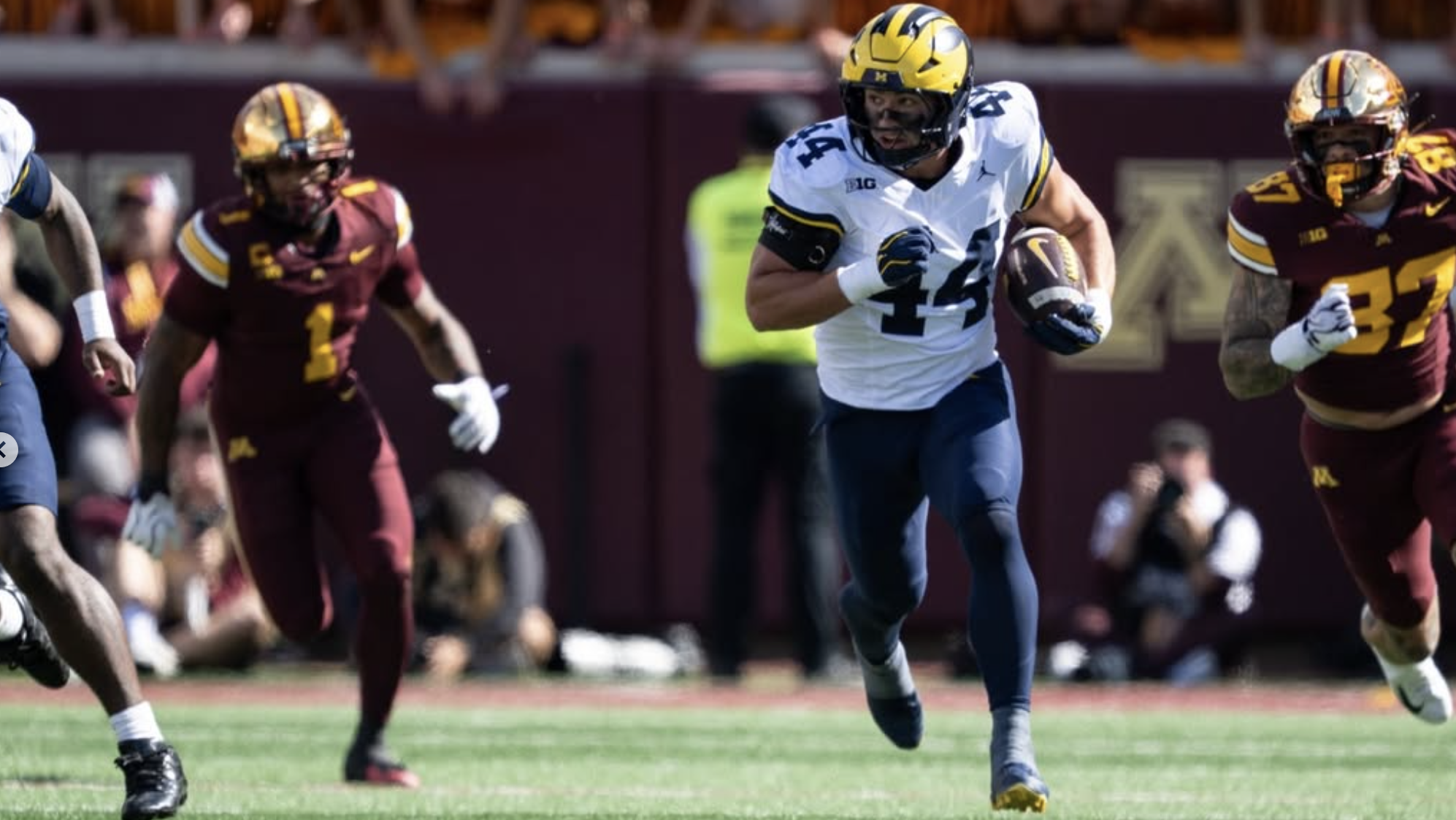
Michigan’s offense hits rock bottom in 20-14 loss to Minnesota
Michigan spent the last several weeks talking about an offense that needed to evolve.
On Saturday, nothing looked evolved.
The Wolverines fell 20-14 to Minnesota in a game that should force some serious questions about Jason Beck’s offense, Kyle Whittingham’s willingness to intervene, and why Michigan continues trying to force a system that simply does not fit the personnel on the field.
Michigan is now 0-2 in Big Ten play. Whatever realistic College Football Playoff hopes remained are likely gone. The Wolverines enter the bye searching for answers to problems everyone has seen for weeks.
After Michigan’s previous loss, Whittingham said the Wolverines felt like they were 0-4.
Now it feels like they are 0-5.
The offense was a disaster
Michigan finished with 180 total yards.
The Wolverines averaged 3.7 yards per play, went 3-for-10 on third down and managed only 11 first downs. Minnesota ran 65 plays to Michigan’s 49 and held the ball for 37:36.
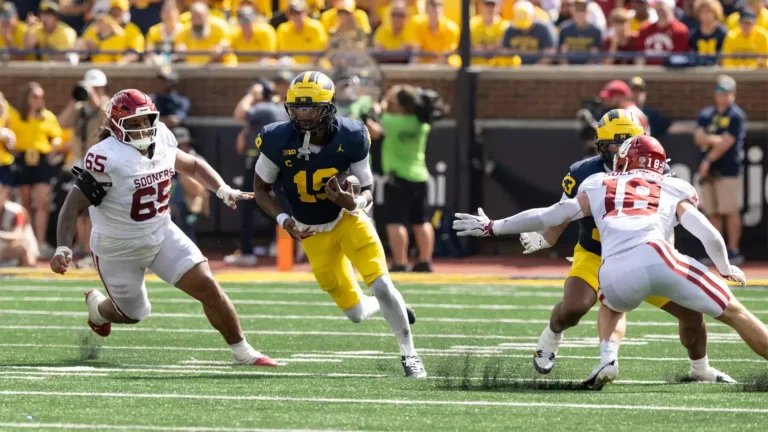
Bryce Underwood finished 10-of-21 for 101 yards with two interceptions. Michigan ran for just 79 yards on 28 carries.
The offense scored one touchdown.
Michigan’s other seven points came when Nathaniel Staehling intercepted Drake Lindsey and returned it 79 yards for a touchdown late in the second quarter.
That means the offense was directly responsible for seven points against Minnesota.
Underwood was not good. After showing legitimate progress over the last few weeks, he looked uncomfortable, missed throws, and made two damaging mistakes in the second half. His interception early in the fourth quarter gave Minnesota the ball at the Michigan 35, and three plays later the Gophers were in the end zone with a 20-14 lead.
But Michigan’s offensive problems go much deeper than its quarterback.
That falls on Beck and, ultimately, Whittingham.
How many times does Michigan need to see this?
At some point, continuing to do something that isn’t working stops being patience and starts becoming stubbornness.
Michigan keeps returning to the same ideas.
The Rhino packages. The east-west runs. Slow-developing concepts behind an offensive line that has not consistently created enough movement. Runs that take too long to get started.
Personnel groupings that seem designed around what Beck wants to run, while ignoring what Michigan is actually good at.
It is insanity at this point.
Michigan has spent weeks acknowledging that it needs more explosive plays and more rhythm offensively. Then it continues calling an offense that produces neither.
Look at Michigan’s explosive plays Saturday.
Its only two passes of at least 15 yards were both to JJ Buchanan — gains of 16 and 17 yards. Its only two runs of at least 10 yards came from Underwood, who gained 13 and 14 yards.
That’s it. Four explosive plays, all from Underwood.
Maybe that should tell Michigan something.
Buchanan finished with four catches for 50 yards on nine targets. Andrew Marsh had three catches for 29 yards. Hogan Hansen had three for 22.
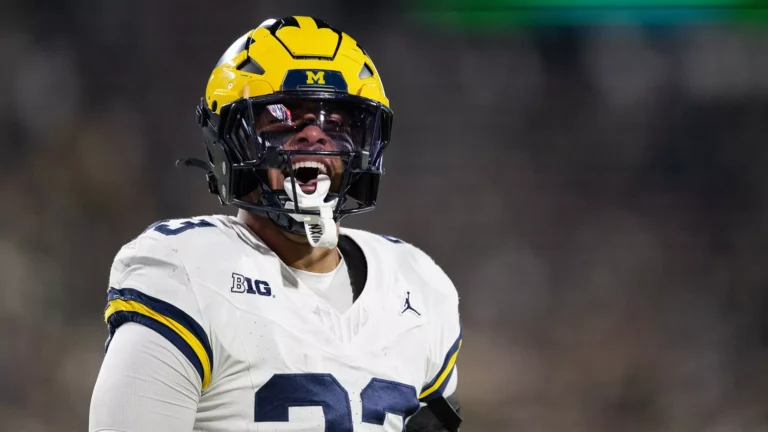
Jordan Marshall actually started the game well, running for 15 yards on Michigan’s first two snaps. He finished with 50 yards and a touchdown on 10 carries.
The opening drive reached third-and-1 at the Michigan 49. Instead of building on two productive Marshall runs, Michigan went to a direct snap and lost a yard.
Punt.
After a blocked Minnesota punt gave Michigan the ball near midfield in the second quarter, the Wolverines went backward and punted three plays later.
A short field. A chance to take control. Nothing.
Michigan led 14-7 at halftime despite producing just one offensive touchdown because its defense and special teams repeatedly handed the offense opportunities.
The offense wasted almost all of them.
Underwood deserves criticism, but he isn’t the whole problem
Underwood took a step backward Saturday. There is no reason to pretend otherwise.
His first interception came on Michigan’s second offensive snap of the third quarter. The second came on the first snap of a fourth-quarter possession with Michigan trailing by only three. Those are losing plays.
He also took three sacks and never consistently found the rhythm or command he showed in recent weeks.
But Michigan cannot spend September talking about developing its young quarterback and then ask him to survive an offense this disjointed.
When Michigan desperately needed offense in the fourth quarter, what finally worked?
Underwood scrambling.
Underwood hit Buchanan for 12 yards, then scrambled for 14 and 9 more. Suddenly Michigan had crossed midfield.
Then came a Savion Hiter run for minus-1. Another Hiter run for 1. Sack. Punt.
That sequence might be the best summary of Michigan’s offense right now.
The quarterback creates something. Michigan gets momentum.
Then the play-calling kills it.
The defense deserved better
Michigan’s defense should be furious.
The Wolverines intercepted Lindsey twice. Smith Snowden ended Minnesota’s second possession with a pick. Staehling turned his interception into Michigan’s second touchdown.
Michigan held Minnesota to 262 total yards and 4.0 yards per play.
Troy Bowles finished with nine tackles, 1.5 tackles for loss and two quarterback hurries. Rod Moore and Aisea Moa each had seven tackles. Staehling added six tackles, 1.5 tackles for loss and the pick-six.
Minnesota averaged just 3.2 yards per rush, and Michigan still lost.
Part of that came from the defense repeatedly being put back on the field.
Minnesota ran 65 plays and possessed the ball for more than 37 minutes. Michigan’s offense managed just five total yards in the third quarter.
Five.
Eventually something had to give.
Michigan gave the offense one last opportunity, and it couldn’t finish.
The bye has to become a reset
Michigan cannot treat this like another normal week.
Something has to change.
The Wolverines have now lost their first two Big Ten games and wasted consecutive defensive performances that gave them every opportunity to win.
This isn’t about scrapping an entire system in October.
It is about finally acknowledging what the offense actually has.
Let Marshall run downhill. Stop asking the offense to execute slow-developing concepts that haven’t consistently worked. Stop forcing packages simply because they are part of the system.
Michigan has talked about fixing the offense. The bye week is where the talking has to end.
Because after five games, this is no longer a small sample.
If Beck and Whittingham keep forcing the same ideas on offense, the results will keep looking exactly like Saturday, and that’s indefensible.