

Tommy Carr era begins as Michigan rallies past Penn State, but questions remain
The Tommy Carr era has begun at Michigan. Whether it marks a turning point for the Wolverines’ offense or simply a new quarterback facing the same problems remains to be seen.
Michigan escaped Saturday with a 21-18 win over Penn State, rallying from a 3-0 halftime deficit behind three defensive takeaways and a quarterback change that might have altered the direction of the program.
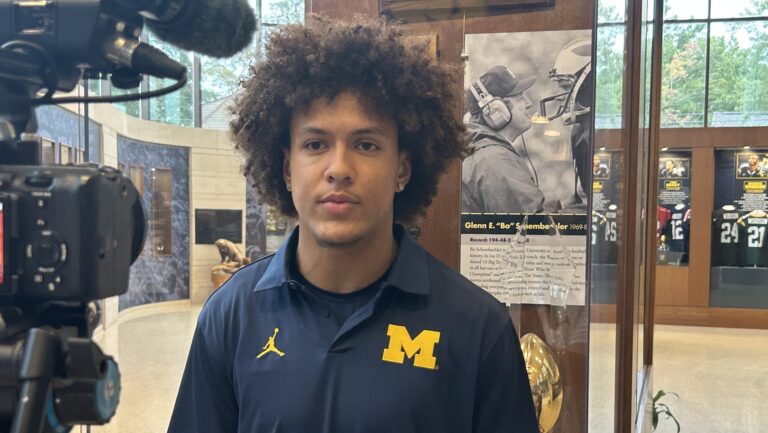
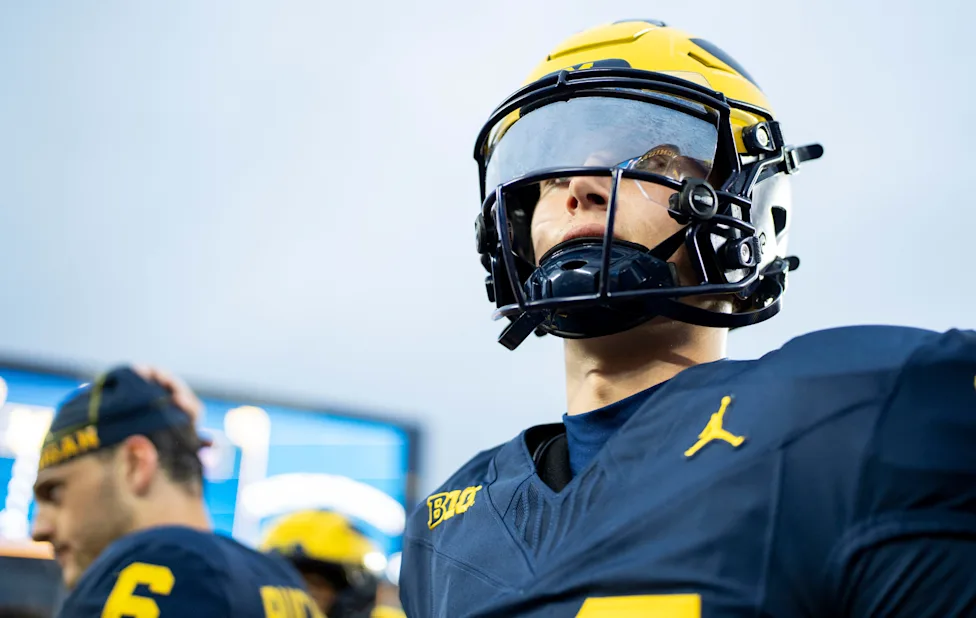
Bryce Underwood, the former No. 1 overall recruit and face of Michigan’s future, watched the second half from the sideline after throwing two interceptions before halftime. Carr, the true freshman backup, took over and helped the Wolverines score 21 unanswered points before holding off a late Penn State rally.
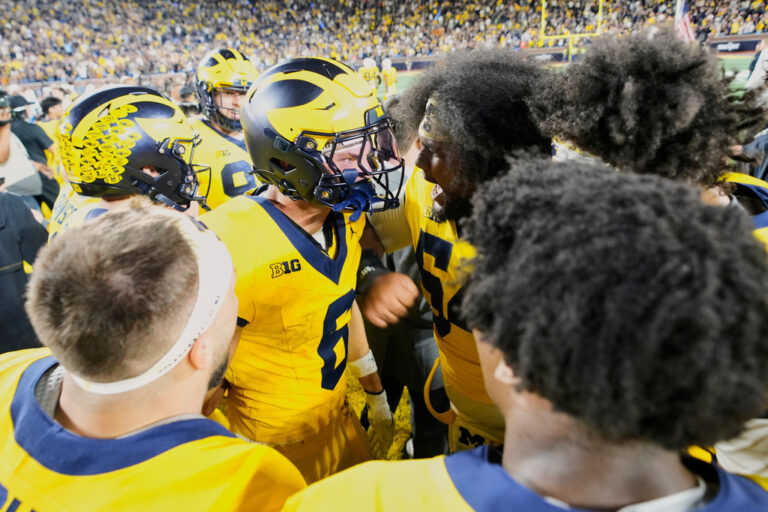
To Underwood’s credit, he was seen celebrating with Carr and other teammates throughout the second half.
It was a necessary win for Kyle Whittingham’s team coming out of its bye week, particularly after the offensive disaster against Minnesota two weeks earlier.
But the victory shouldn’t erase what happened during the first 30 minutes Saturday. Michigan had two weeks to evaluate an offense that has struggled to find an identity, and somehow returned with a game plan that looked remarkably similar to the one that had already failed.
Underwood deserved to be held accountable for his mistakes. The turnovers were unacceptable, and Whittingham has repeatedly identified turnovers as one of Michigan’s biggest problems.
But Underwood cannot become the scapegoat for an offense whose issues extend well beyond the quarterback position.
That responsibility belongs to offensive coordinator Jason Beck and Whittingham, too.
A change Michigan couldn’t avoid
The numbers from Michigan’s first half were impossible to defend.
The Wolverines managed just 80 total yards on 23 plays, averaging 3.5 yards per snap. They rushed for 37 yards, converted four of seven third downs and failed to score despite Penn State managing only a field goal of its own.
Underwood finished the half 5-of-11 passing for 43 yards and two interceptions.
Penn State’s Zion Tracy picked off Underwood for his first interception midway through the second quarter, taking a pass from Michigan’s 36-yard line. The second came with 31 seconds remaining before halftime, when Josiah Zayas intercepted Underwood at the Penn State 9.
It was a great play by Zayas, but it was yet another turnover for Underwood when Michigan needed points.
Neither mistake led to Penn State points, thanks in large part to Michigan’s defense, but both eliminated opportunities for an offense already struggling to sustain drives.
Whittingham has made turnovers a central focus all season, and especially since the Minnesota game. After watching his quarterback throw two interceptions in a scoreless half, it became increasingly difficult to avoid a change.
Carr entered to begin the third quarter.
The freshman completed his first pass to JJ Buchanan for 11 yards and a first down. Michigan eventually punted on the possession, but Carr looked comfortable enough to suggest the Wolverines could move the ball with him.
He finished 5-of-7 passing for 47 yards without a turnover, adding 36 rushing yards and a touchdown on four carries.
Those aren’t eye-popping passing numbers. They didn’t need to be.
Carr took care of the football, made some timely throws, and provided enough of a running threat to help Michigan find success on the ground.
It was exactly the type of performance Michigan needed in the second half.
Why did Michigan wait to change the offense?
This is where Saturday’s victory becomes difficult to evaluate.
For weeks, Michigan has insisted it needs to examine its offensive approach and find better ways to put its players in position to succeed.
The bye week presented an ideal opportunity to make those adjustments.
Instead, the Wolverines spent much of the first half returning to the same concepts that have frustrated fans throughout the season.
There were the east-west runs that struggled to generate anything. There were the loaded RHINO packages, often leaving Michigan with only two eligible receiving options downfield. There was little indication that the staff had meaningfully reconsidered whether its preferred approach actually matched the strengths of its personnel.
Michigan’s opening possession offered a familiar example.
After gaining a first down with a 16-yard completion to Buchanan and moving into Penn State territory, the Wolverines eventually faced third-and-9 at the Penn State 35. Rather than attacking the sticks, Michigan ran an outside run with Savion Hiter that lost a yard.
Later, backed up at its own 7, Michigan called a run to the left for Bryson Kuzdzal that lost five yards.
These weren’t isolated instances of an offense making mistakes. They were reminders of the same questionable decisions that contributed to Michigan’s problems before the bye.
Then Carr entered, and there were stretches when the offense looked different.
Michigan found more success attacking between the tackles, using downhill and zone-running concepts rather than continually trying to stretch defenses horizontally. Carr’s mobility became a useful part of the offense, and the Wolverines leaned into a more direct rushing attack.
The clearest example came early in the third quarter.
Following a Rod Moore interception, Michigan took over at the Penn State 43. Carr’s first-down pass fell incomplete, but on second down, Kuzdzal took a straightforward handoff out of the pistol and raced 43 yards for a touchdown.
No elaborate formation or slow-developing misdirection was necessary. Michigan put the ball in the hands of a running back, attacked the defense, and scored.
The Wolverines eventually finished with 174 rushing yards in the second half after managing only 37 in the first.
Hiter led the team with 78 yards on 11 carries. Jordan Marshall added 49 yards and a touchdown on 14 attempts, while Kuzdzal finished with 38 yards and a score on just two carries.
Carr also contributed with his legs, including a 22-yard run that set up Marshall’s 1-yard touchdown late in the third quarter.
The production was encouraging. The questions it created were unavoidable.
Why did the offense look different at times after Carr entered? Was Beck simplifying the approach for his freshman quarterback? Did the staff finally recognize the need to lean harder into its running backs and attack downhill?
Whatever the explanation, Michigan should not have needed another miserable half of football to start making adjustments.
And if those adjustments were available all along, why weren’t they being made with Underwood?
Defense delivers when Michigan needs it most
For all the attention the quarterback change will receive, Michigan doesn’t win this game without its defense.
Penn State controlled much of the first half but managed only three points. The Nittany Lions opened with a 16-play, 69-yard possession that took more than nine minutes, only for Michigan’s defense to hold them to a 24-yard field goal.
After halftime, the Wolverines went from keeping Michigan in the game to putting the offense in position to win it.
Moore started the turnaround by intercepting Rocco Becht on Penn State’s first third-quarter possession and giving Michigan the ball at the Nittany Lions’ 43.
Two plays later, Kuzdzal was in the end zone.
On Penn State’s next possession, Chris Bracy intercepted Becht at the Michigan 26, ending another promising drive.
This time, Michigan’s offense responded with its best sustained possession of the afternoon.
The Wolverines marched 74 yards in 11 plays, highlighted by Carr’s 22-yard completion to Hogan Hansen, Hiter’s 18-yard run and Carr’s 22-yard keeper.
Marshall eventually punched the ball in from a yard out, extending Michigan’s lead to 14-3 with 2:14 remaining in the third quarter.
Penn State answered with a touchdown and successful 2-point conversion early in the fourth, cutting Michigan’s advantage to 14-11.
With the Wolverines’ offense struggling again, the defense delivered one more time.
Bracy sacked Becht with just over five minutes remaining, forcing a fumble that Enow Etta recovered and returned to the Penn State 13.
Michigan needed only three plays to capitalize.
After a 3-yard loss by Marshall, Carr completed a 9-yard pass to Buchanan. An illegal formation penalty wiped out a Carr scramble that would have picked up a first down, leaving Michigan facing third-and-9 at the Penn State 12.
Carr responded by taking off to his left and running into the end zone with 2:58 remaining.
Michigan led 21-11.
All 21 of the Wolverines’ points came on possessions following Penn State turnovers. That’s the game.
Penn State made things uncomfortable with a late touchdown, as Becht connected with Chase Sowell from 24 yards out with 1:11 remaining. But Michigan secured the ensuing onside kick, and Marshall picked up a first down to put the game away.
The Wolverines forced three second-half turnovers, held Penn State to 65 rushing yards for the game and recorded three sacks.
Troy Bowles led Michigan with 10 tackles, while Bracy and Nathaniel Staehling each finished with eight.
Becht threw for 267 yards, but two interceptions and a costly fourth-quarter fumble overshadowed his production.
Once again, Michigan’s defense did more than enough to win.
This time, the offense finally rewarded it.
Carr deserves his opportunity. The coaches still owe answers.
Michigan’s 21-18 victory provides a much-needed positive moment after the Minnesota loss, and Carr deserves credit for making the most of his opportunity.
The freshman entered a difficult situation, protected the football, and delivered two important rushing plays during Michigan’s comeback.
He wasn’t asked to throw the ball 30 times or carry the entire offense. He was asked to execute, avoid mistakes, and capitalize on the opportunities Michigan’s defense created.
He did all three.
But it’s important to separate Carr’s success from the broader conversation surrounding Underwood.
Underwood has not played well enough. His decision-making against Penn State was poor, and the interceptions made a change understandable.
At the same time, Michigan’s offensive problems didn’t begin with him and won’t automatically disappear with Carr.
The Wolverines have struggled to establish a consistent rushing game, have repeatedly relied on questionable personnel groupings, and have spent far too much time trying to force concepts that haven’t produced reliable results.
Saturday offered further evidence that Michigan has enough backfield talent to be more productive than it has shown.
It also reinforced that the defense is capable of keeping this team competitive when the offense isn’t creating additional problems.
The staff has talked about evaluating its approach, making adjustments, and figuring out what works. Coming out of the bye, the first-half offense suggested those conversations still haven’t translated into enough meaningful change.
Carr gives Michigan a chance at a fresh start. He deserves the opportunity to build on what he accomplished Saturday.
But that fresh start cannot become a blank check for Beck and Whittingham.
If anything, Michigan’s success with Carr should increase scrutiny of how the offense has been handled.
The Wolverines found a way to win, and that’s worth celebrating. The players deserve credit for responding to another difficult afternoon, particularly on defense.
But changing quarterbacks is only one part of fixing an offense.
The coaching staff still has to do its part.