

Everything Kerry Coombs said Wednesday ahead of Michigan vs. UTEP
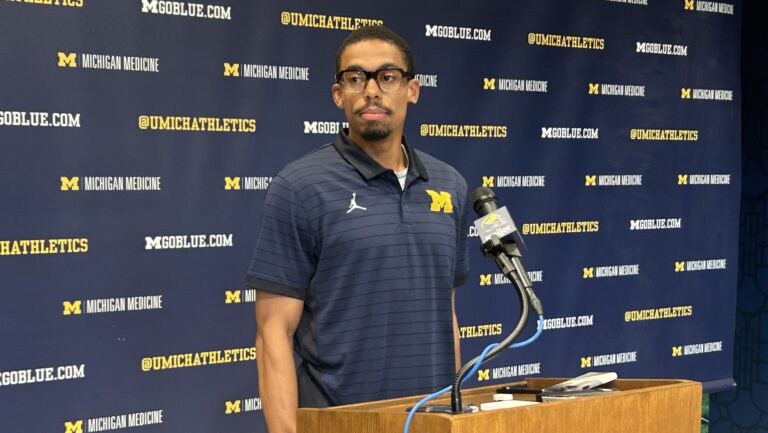
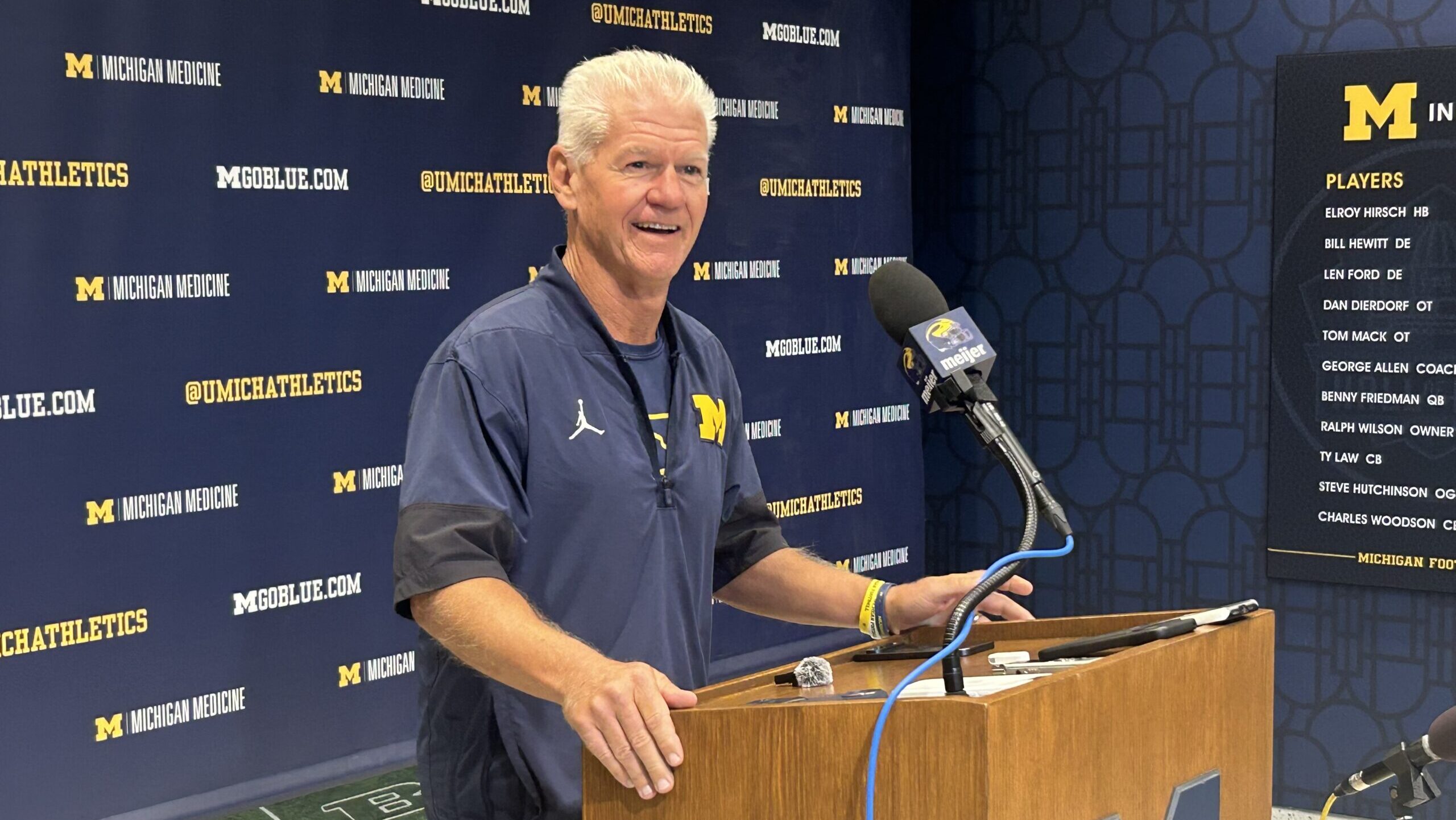
Michigan special teams coordinator Kerry Coombs met with the media Wednesday as the Wolverines prepare for Saturday’s matchup with UTEP at Michigan Stadium.
Coombs discussed Michigan’s early special teams performance, Andrew Marsh’s role as a punt returner, Zeke Berry’s impact as a gunner, punter Cam Brown, the Wolverines’ kickers and the importance of field position.
Here is everything Coombs said Wednesday.
Special teams start
Oh, there’s a ton of things we’d like to improve. Obviously, I’m very happy with our punter, with our specialists in general. They performed well. Cam had a really good game on Saturday, although he would tell you there were a couple of balls he’d like to have back. But we’ve kicked the ball off well with the freshman kicker. Trey’s done a good job making kicks. Nico’s snapped well. So from a specialist standpoint, they’ve performed well. We’ve got lots of things we can improve. But then in the punt block, the penalties have been an issue, and we’ve got to fix that. And we will. We will. We absolutely will. And kickoff return, we’re close. So there are a lot of things that we can improve on, and we look forward to doing that this week.
Andrew Marsh returning
Well, I think the big thing is just having a comfort level with the scheme and being aware of where the people are around him. We’ve got to help him by holding up the gunners better and making sure that he has space and comfort when he fields the ball. And so I think that that’s, you know, it’s an 11-player process. And so if one guy doesn’t get his guy and he’s running down the field at you, that’s a tough deal. And so, you know, number one priority for us is always to secure the kick. And so he’s got to make that decision and feel good about where the coverage is. And so we’ve got to do a better job of holding guys up. We had some reps Saturday that were better. I’m excited about that, looking forward to that. He’s a dynamic athlete. We want to give him the ball in space.
Marsh’s return potential
Well, I don’t think there’s any doubt that he can. Yeah, I mean, I think that we’ve seen what kind of athlete Andrew is, and there’s a reason why he’s back there. So we’ve got to do a good job, get him in space and let him play.
Zeke Berry’s impact
I think it’s such a great question. You know, I’ve had great gunners in my history, and he is among the very, very best. And when you can force fair catches consistently, and he’s forced five of them in two games, that’s a difference-maker. And so he does a great job at the line of scrimmage. He runs his butt off. He’s over 20 miles an hour every single rep of punt, and he knows how to front up the returner. And the one that I liked the best on Saturday was the one they didn’t fair catch where Mason Curtis came down, and he didn’t make the tackle, but he denied the vertical return, and Zeke was there to clean him up. It’s a minus-four return, and I just thought that Zeke’s just playing fantastic out there.
Cam Brown’s control
You know, Cam’s the fourth Australian punter that I’ve coached, and they do have a unique ability to do things with the ball on their feet because that’s how they grow up. I mean, I’ve never been to Australia, so I don’t know what they do, but it’s different. And he just, he’s very, very good at putting the ball where we want him to put it. And that’s really important because when you don’t, it creates issues. We had one that wasn’t there on Saturday, and it creates an issue. So we have very specific, targeted places for him to put the ball. Every Thursday is a pooch day, and Coach Whitt and Coach Hill run that because I’m running punt protection in a different place. Coach Whitt told me Thursday it was the best we’d been all year, and I think it showed up on Saturday. So he’s really, he’s off to a very good start.
Avoiding punter penalties
Well, we spent a lot of time on it yesterday after practice. We don’t want to cross the punter when we’re on the foot side, if that makes sense. So if I’m on that punter, if he’s right-footed, I just want to put my hand on the ball. When you cross, anytime you go in front of the punter, you run the risk. But the biggest risk is leaving your feet. You have no control of your body when you leave your feet. It’s hard to get out of the way of guys. And so we’ve been very aggressive, and all of that comes down to me coaching it and coaching it better. And I’m looking forward to continuing to apply pressure without penalties.
Aden Reeder’s growth
Yeah, he’s doing a really good job. You know, I think there are — the thing about Aden, the thing I love about Aden is that he will come back, he will meet and watch tape and learn over and over and over again. We had a rep, I can’t remember which day it was this week, where he didn’t do it very well. I think it was Monday. And so we texted him and said, hey, you’ve got to come back in. He was in, like, the academic center. He was running over, he’s sweating, he’s breathing hard because he needed to know right then what it was. And then he sprinted back over to academics. But I love the fact that he’s trying to learn as much as he can and take it all in. It’s different. But he’s got a real, real high care factor, and that’s really important. And, obviously, the ability to do the job.
Fixing punt penalties
Well, you just got to coach it better. Like I said, we can’t leave our feet. We’ve got to know where we are on the field. We’ve got to know — you know, we spend a lot of time studying the block spot, where the punter is going to put his foot on the ball specifically, and we target that. But again, I think that that’s just stuff that I have to, by repetition, continue to coach over and over again. I think that what happens is, in the course of the week, different players take on different roles and different jobs, and maybe it’s something that they didn’t get as many reps in in the summer or the spring, and now all of a sudden you need them and you put them in a spot. Well, when that happens, you’ve got to coach the tar out of them. And I just — you know, that’s my job, and we’re going to fix it.
Wanting special teams
Every single one, every day. And it’s rewarding. We’ve got young players that want to play. We’ve got starters that want to play. We’ve got guys that want to play. And that is fantastic. And so we’re constantly working on figuring out where can a guy help us. And even if it’s one play or one unit, how can he help us? And honestly, how can we help them? How can we get them on the field so that they can have that experience, which is going to help them as offensive and defensive players.
UTEP preparation wrinkle
Yeah, it’s really weird. It’s interesting. You don’t really have that very often. You get it in conference play sometimes, where you get guys that have played each other. But in Week 3, you know, your back-to-back teams that played each other in Week 1 is different. It does give you a good picture, you know, kind of what your game plan was against Oklahoma. And so you get a chance to see what Oklahoma did to them and how they addressed them. And then, you know, you take from that. So, yeah, it’s interesting. I don’t know that it’s dramatically different. I’ve never played UTEP before. But I think it’s helpful.
Building punt plans
Such a great question because what we — a lot of it is based on Cam and how he’s feeling. And then a lot of it is based on what we’re seeing from the other team. So we want to always try to put him in a spot where he can comfortably have his foot hit the ball and put it where we want it. And so sometimes that’s going to be directional to the left. Sometimes it’s directional to the right. Sometimes it’s out of the pocket. And so a lot of that is what we spend our time on during the week versus the looks that we’re going to see from the other team, the protection that we have set and then how — you know, where the ball is on the field. All of those things kind of play into it. And then every time before we take the field, Cam and I talk about, you know, which punt we want to use in this particular spot and why. And so he has a good understanding of where we’re trying to put it and what we want to do. And he has good input on that. You know, he tells me what he’s feeling, which I think is important too.
Australian punter background
I don’t have any idea. The first one I discovered was out of necessity, was Cam Johnston, and we didn’t have a punter. And it was springtime and there was no portal, and I went on YouTube looking for punters. And I saw this Australian kid kicking the ball, and it was literally going out of the screen. I thought it was fake. And I called the guy who put it on YouTube. His name was Nathan Chapman. He runs a thing in Australia. And he said, it’s real. I said, there’s no way that’s real. I said, go film it again and let me see the ball, the whole thing. He did. We ended up bringing him over, and he was fantastic. And I had no idea, no concept of that at that time. And he was just unique. And so then I had the two Fletcher boys down in Cincinnati, and it was the same thing. They were different kinds of athletes. I don’t have an idea. I just know that he can go out there and take the ball and go like this, and it goes right where he wants it to go, like line drives, like spirals, like I throw a ball. And it’s weird. And so I think it all comes from the Australian rules football stuff, where that’s what they’re doing. They’re running and moving and kicking balls and all that kind of stuff. It also makes them tough. I mean, I think the fact that they play that, it gives them a certain toughness and confidence. And they also can see the field without looking at the ball. And they always have a comfort level with where the ball is, which is a little bit unique to traditional punters who do that. Like they can see and then punt it, and obviously love what they’re doing.
Flipping field position
Well, field position to me, starting field-position differential is the single biggest factor in success in college football. And our job is to put the offense in the best spot we can and put the defense in the best spot we can as special teams units. That’s our job. I mean, it’s the most critical job we have. So we understand that. We talk about it all the time. And we’re very frustrated when we don’t do it. And so Saturday happened to be an opportunity for those types of kicks, those types of punts where we were going to have a chance to get them, you know, inside the 20, inside the 10, inside the 5. And thankfully the unit — and I think it’s important that everybody understands it’s not just a punt. You know, actually the punts were too deep. But the fact that those gunners were on the goal line kept those balls from going to the end zone. And that’s what’s important. Sometimes we, you know, Cam’s getting a lot of pats on the back, but his ball was actually too deep on both of those kicks. And later on, if you hit it too deep, you’re very likely going to be chasing it in the end zone, which is frustrating. But the gunners really were superior.
Trey Butkowski’s range
I mean, his range continues to extend. Last week he made 51, 53, 55 in practice consecutively. He’s excited about that. And so I think he’s got great potential for deeper kicks, longer kicks as we get going. I think that that’s all predicated on down and distance. What I’ve learned about our stadium, it’s a little windier than what I had remembered. And so you’ve got a little bit of an issue there where you’re constantly trying to evaluate that. I thought Saturday there was a breeze, affected the one kickoff that we had, we didn’t get a touchback on. So I think — but I’m very excited about Trey and his future.
Reading stadium wind
It’s not a meteorologist, but we do have a coach who’s responsible for every day giving us a good idea and update about the weather and what we should expect on Saturday and those kind of things. Like I said, I think that our stadium, you really got to — you know, the flags on the goalposts are no indicator. And so you’ve got to really kind of figure out, and we’ve spent a lot of time doing that, just personal experience, standing there, looking at the flags. I had them put the flags up, even though nobody was in the stadium this summer, so we could go out there and kind of get a feel for what we can see. But it is a little bit swirling, and you might start off the game, it’s this way, and then it’s that way. And so we’re just working through and processing it because it does affect kicks.
Jacob Baggett’s development
Yeah, I think he’s done a really good job for a freshman kid. He’s doing exactly what we want him to do. One kick was not well placed on Saturday, but the other ones were. And for us, ball placement and hang time are critical in both punt and kickoff, and so I think he’s off to a very good start. He’s going to continue to develop in the place-kicking world as well. And I’m excited about his future. I like him because he’s tough. I can rip him, and he doesn’t buckle. And for a freshman kid, it’s pretty good.
Starters wanting reps
I don’t know that I would say any specifics. I think that kids, you know, I texted with one of our starting defensive players today and said, hey, look, I got to move you to a two. He’s not on the depth chart. He’s what we would call a spare. Coach Whitt talks about a pair and a spare at every position, and he’s a spare. And I said, I got to bump you up to a two on punt. I need you to be able to do that. And he was really excited. You know, he’s a starter on defense. So, like, that’s rare. I think that Coach Whitt has made it a priority for our kids, and they understand that. And, you know, nobody came here to Michigan to play right guard on punt. I get that. You know, or the left tackle on kickoff return. They didn’t. And so you’re asking them. Those are truly the sacrificial team jobs that we’re asking them to do. And so what I love about our kids is they’re excited to do them and to do them well, and it’s important to them.
Kickoff philosophy
Absolutely. He can kick it in the bleachers every freaking time, and he’ll be very, very happy if he does. So, yeah. But when not, it’s got to be placed appropriately. And if it’s not, then it’s a problem. And he knows that.