

Michigan learned plenty about Bryce Underwood, now it must adjust
Michigan spent an entire offseason building its offense around Bryce Underwood.
One game into the Jason Beck era, Kyle Whittingham made it clear Monday that process is nowhere near finished.
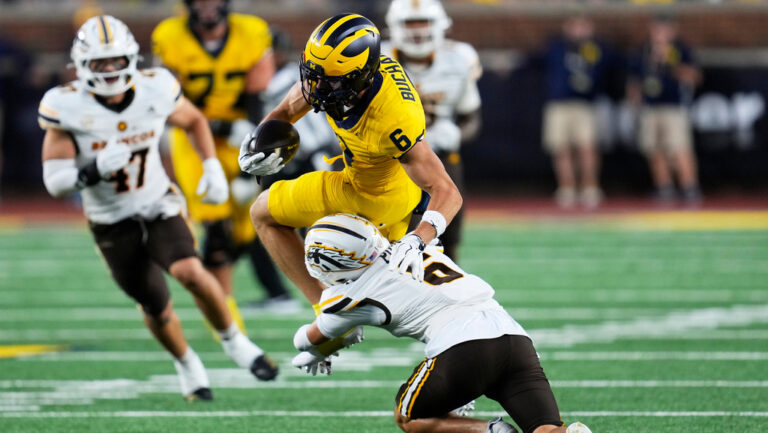
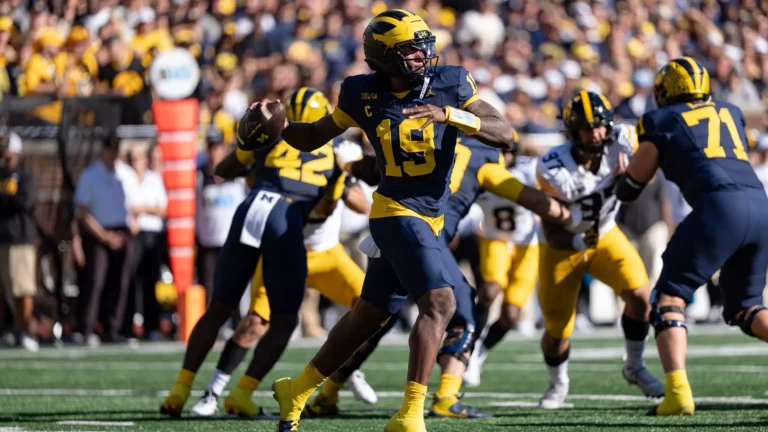
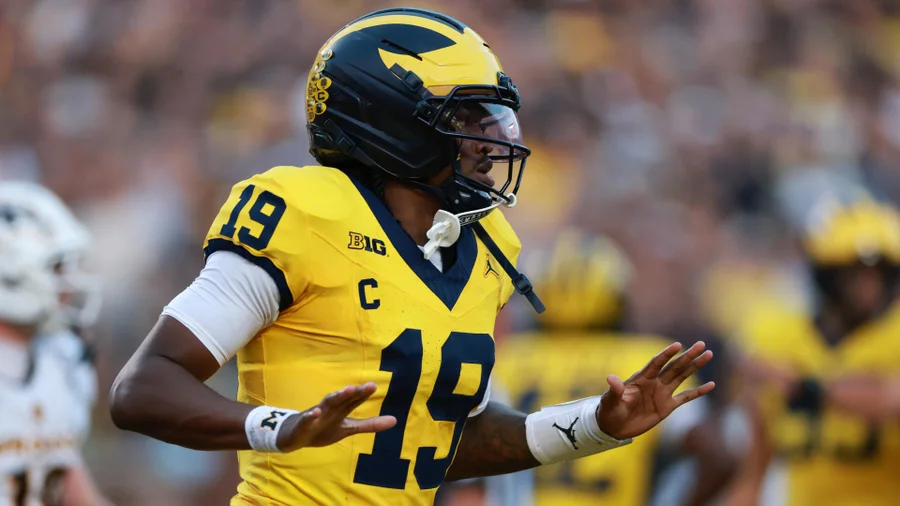
Underwood’s performance against Western Michigan was uneven. There were flashes of everything Michigan believes he can become, including the ridiculous final throw that traveled more than 60 yards while Underwood was off balance and taking contact. There were also stretches where the offense looked uncomfortable, stagnant, and unable to consistently put its quarterback in advantageous situations.
Whittingham’s biggest takeaway wasn’t that Michigan needs to abandon what it spent the offseason installing.
It was that the Wolverines learned more about what works.
“We’ve learned a lot,” Whittingham said, while making it clear he wasn’t going to get into the specifics of what those lessons mean schematically.
That might be the most important thing Whittingham said about Michigan’s offense Monday.
Michigan can spend all spring and fall camp talking through concepts, working reads against its own defense and installing answers for different looks. Eventually, though, it has to see how those ideas hold up when another team has spent months preparing to stop them.
Western Michigan gave the Wolverines that first real test.
There were opportunities Michigan missed. Whittingham specifically pointed out that the quarterback run-read game was not as sharp as it needed to be and said there were throws available that could have produced more. It was part Underwood, part execution around him, and part the natural process of figuring out what this offense should actually become with him running it.
That last part matters.
Michigan doesn’t need Underwood to become a generic quarterback running Beck’s offense exactly as it exists on a whiteboard. The goal should be to make Beck’s offense fit Underwood.
Whittingham essentially said as much Monday.
“We’ve got to keep coaching him up in repetition and, again, taking the offense in a direction — continue to take the offense in a direction that fits his skill set best,” Whittingham said.
Underwood’s legs are part of that equation.
Michigan saw it Saturday. When he was able to get outside the structure of the play, threaten a defense as a runner or simply play football instead of feeling like every snap had to be perfectly choreographed, some of his natural ability showed up.
The challenge now is figuring out how to create more situations where those tools matter.
That doesn’t mean turning Underwood into a run-first quarterback or scrapping the passing concepts Michigan spent all offseason installing. It means forcing defenses to account for everything he can do.
If the quarterback run game is a legitimate threat, linebackers have another responsibility. If Michigan can consistently get Underwood on the move, the defense has to defend more grass. If his legs create easier throws and cleaner pictures, suddenly some of the burden comes off a quarterback still learning a new offense.
Western Michigan also gave Michigan something it couldn’t get from camp: answers.
The Broncos controlled the ball for more than 40 minutes, limited Michigan’s possessions and forced the Wolverines to operate with very little margin for error. Michigan compounded that problem with penalties, turnovers, poor third-down execution, and an ineffective rushing attack.
It wasn’t pretty, but Michigan escaped with a win, and now the coaching staff has actual game film showing what Underwood looks comfortable doing — and where the offense needs to help him.
That is far more useful than another perfect August practice.
Whittingham spent much of the preseason saying Michigan needed to learn about its team once the games began.
It just learned quite a bit about its quarterback.
Now comes the important part: doing something with it.